

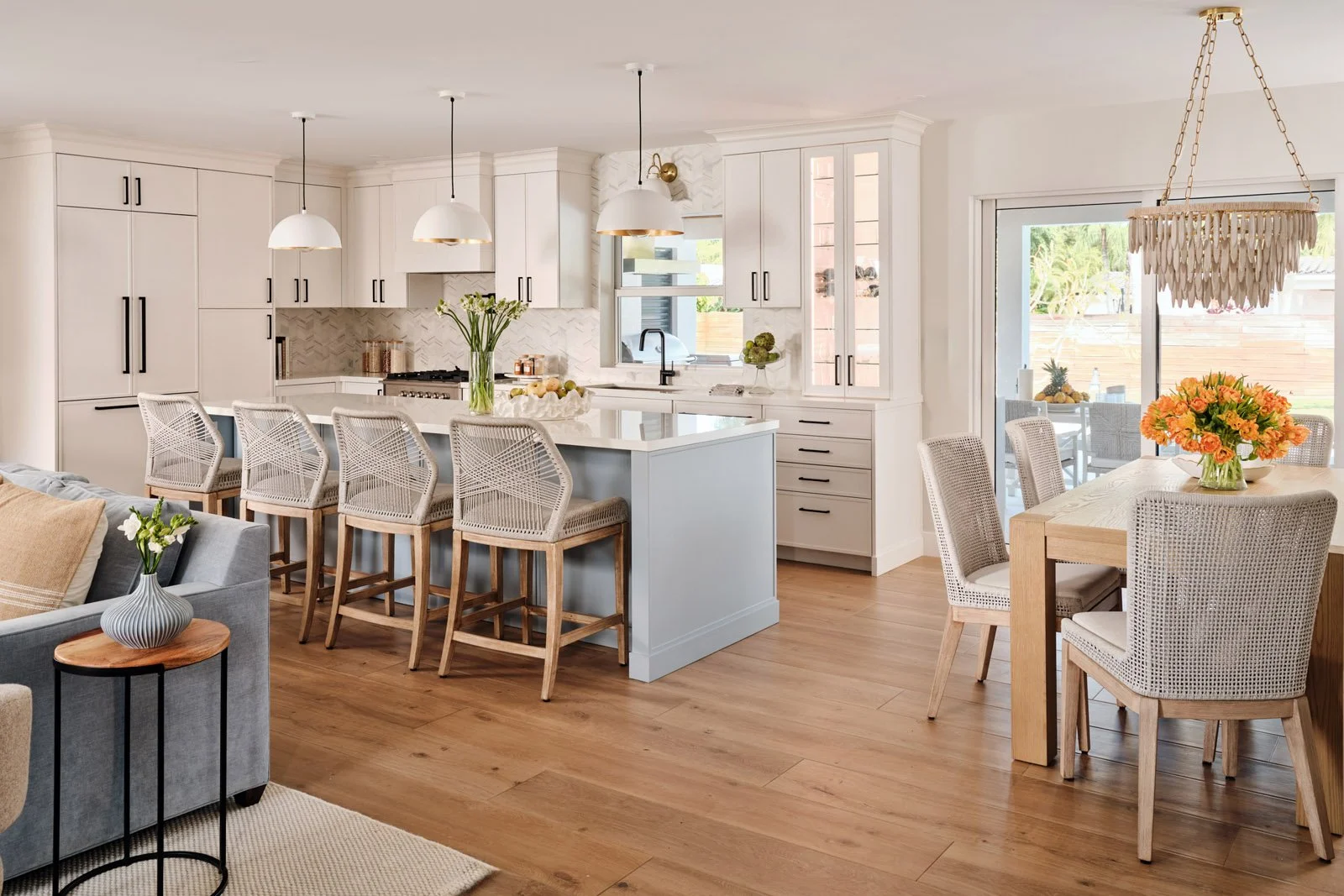
Open-concept kitchens have had a very good public relations team.
For years, they have been treated as the automatic answer to every outdated floor plan. Small kitchen? Open it. Wall between the kitchen and living room? Remove it. Formal dining room collecting dust? Knock that down too.
And sometimes, yes, opening up a kitchen can completely transform a home. It can bring in more light, improve flow, create better entertaining space, and make the kitchen feel like the heart of the house instead of the room where one person disappears to chop onions alone.
But open-concept is not a magic spell. Removing a wall does not automatically make a home better. Sometimes it creates new problems: less storage, awkward furniture layouts, too much noise, visible clutter, or a living room with a direct view of last night's pasta pot.
A good kitchen design is not about chasing a trend. It is about understanding how the home works, how the family lives, and whether openness actually solves the problem.
When the Wall Really Does Need to Go
An open-concept kitchen is worth considering when the kitchen is already part of the home's daily rhythm. If your family gathers around the island, if you entertain often, or if the kitchen naturally wants to connect to the dining and living areas, opening the space can make the home feel brighter, larger, and more social.
It can also be a smart move when natural light needs help finding its way around. Removing the right wall can allow sunlight to travel farther into the main living areas, making the home feel lighter and more inviting. Natural light is one of those design features everyone loves because it makes both people and countertops look better.
But for an open kitchen to be successful, it has to be planned carefully. The island, cabinetry, appliances, lighting, seating, and surrounding furniture all need to speak the same language. Otherwise, the space may be open, but not especially functional. And "open but chaotic" is not usually the goal.
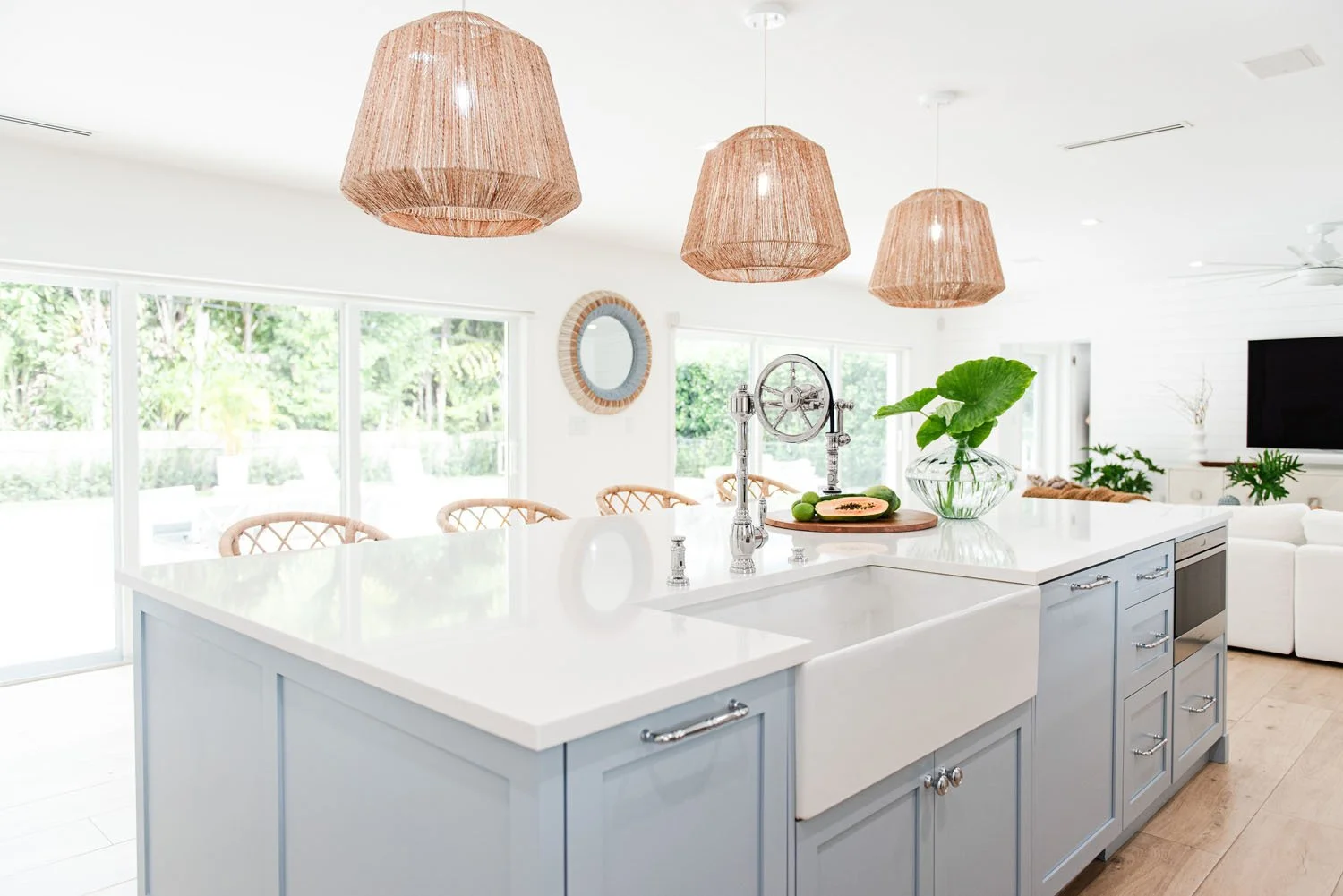
When Open-Concept Gets a Little Too Confident
Open-concept does not work well when the design sacrifices function for the idea of openness.
One of the biggest issues is storage. When you remove a wall, you often lose upper cabinetry, pantry space, appliance storage, or a natural place for built-ins. If those functions are not relocated thoughtfully, the kitchen may look lovely in photos but become deeply irritating when there is nowhere to put the cereal.
Noise is another consideration. Cooking sounds, the dishwasher, conversation, television, homework negotiations, and someone asking what's for dinner all happen in one shared volume of space. For some households, that energy feels warm and connected. For others, it feels like living inside a very stylish airport lounge.
There is also the matter of visibility. An open kitchen means the kitchen is always on display. If you cook often or do not want meal prep visible from the living room, a fully open plan may not be your best friend. Not every cutting board needs an audience.
And sometimes, the architecture itself has opinions. A wall may be structural, contain plumbing or electrical, or help define the proportions of the home. Not every wall is the villain of the story.
The Questions to Ask Before Removing a Wall
Before opening a kitchen, the first question should not be, "Can this wall come down?" It should be, "What will this change actually improve?"
A designer looks at more than the wall itself. We consider how the space flows, where people naturally walk, where storage will go, how the island will function, and what happens to the surrounding rooms once the kitchen is exposed.
Will the dining area still feel defined? Will the living room furniture have a clear layout? Will the kitchen have enough cabinetry? Will the island become a gathering place or an obstacle course? Will a structural beam feel intentional or like an apology hanging from the ceiling?
Demolition is the loud part. Design is the smart part.
Open-Concept Does Not Have to Mean One Big Empty Room
One common misconception is that open-concept means removing every possible wall and creating one large, undefined space. That is how you end up with a room that feels less like a home and more like a furniture showroom waiting for direction.
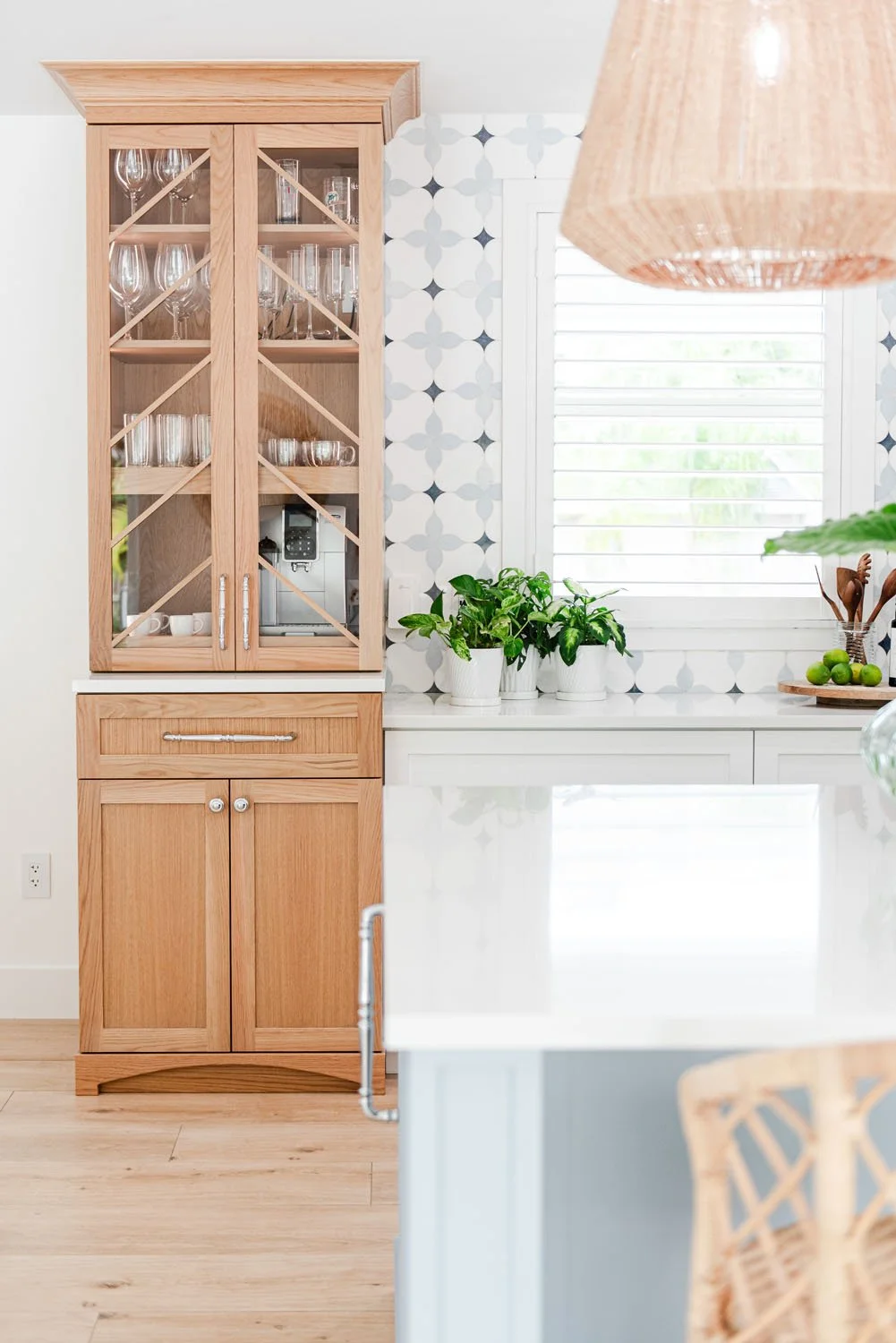
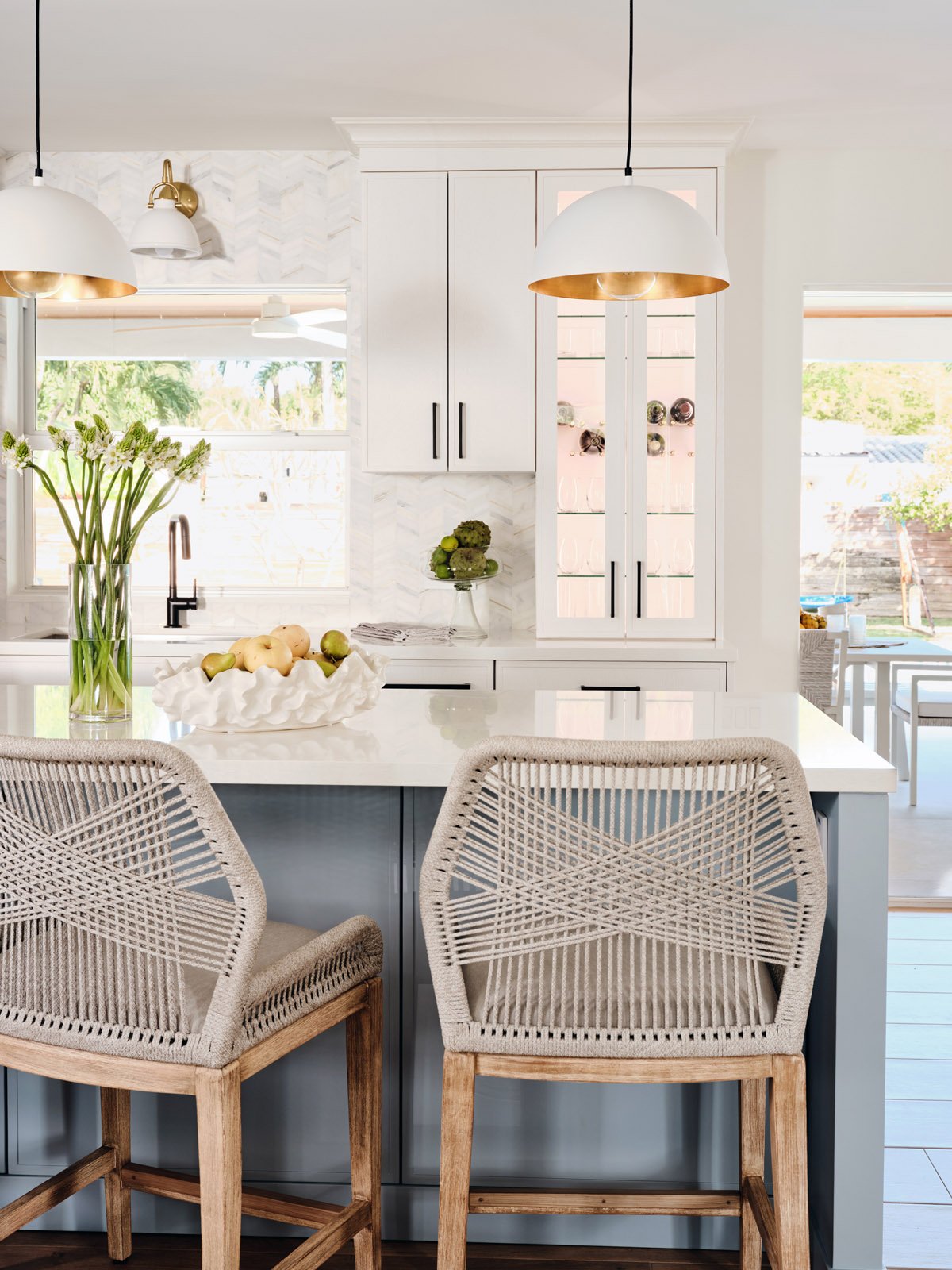
Some of the best layouts are only partially open. A wide cased opening, a pass-through, a peninsula, a partial wall, or a framed transition can create connection without erasing all sense of architecture.
Ceiling treatments, lighting zones, flooring transitions, custom millwork, and furniture placement can also help define areas within an open plan. These details create rhythm. They tell you where one function ends and another begins without putting everyone back into separate rooms.
A Designer's Rule of Thumb
An open-concept kitchen should solve a problem, not create six new ones with prettier pendant lights.
If opening the kitchen improves light, flow, connection, and function, it may be the right move. But if it removes essential storage, exposes too much clutter, disrupts the architecture, or creates an awkward living area, a different solution may be better.
Sometimes the smartest decision is not to remove everything. Sometimes it is to open the right wall, frame the right view, enlarge the right doorway, or redesign the kitchen within a more intentional footprint.
The best homes are not designed by following trends blindly. Trends can inspire. They should not be allowed to hold the floor plan hostage.
If you are considering opening up your kitchen, start with a design plan before construction begins. A thoughtful plan will help you understand what is possible, what is worth the investment, and how every decision affects the rest of the home.
At 2112 Design Studio, we help South Florida homeowners approach renovations with clarity, strategy, and a strong design vision, so the final result feels beautiful, functional, and deeply personal.
Ready to work with an expert interior designer? We’d love to connect.