Where to Start a Kitchen Renovation in Miami: Stop Calling a Contractor First
Where Do You Actually Start With a Kitchen Renovation in South Florida?
Most homeowners in Miami and South Florida begin in the wrong place and it costs them more than they realize. Here's the sequence that actually works.
If you've been thinking about renovating your kitchen, you've probably already done some version of this: opened a browser tab, started a Pinterest board, maybe called a contractor or walked into a cabinet showroom to get a sense of costs.
All of that feels like a reasonable place to start. But for most homeowners, it's actually the wrong sequence, and the consequences tend to show up later, in the form of rushed decisions, budget creep, and final results that feel slightly off in ways that are hard to define.
So where do you actually begin? And who should you call first?
The Contractor-First Mistake
Calling a contractor first is the most common move homeowners make, especially in a fast-moving market like Miami, where everyone is trying to get on a builder’s schedule.
On the surface, it makes sense. You want to know costs. You want to understand what’s possible. And a contractor seems like the person with those answers.
The problem is that contractors build what they’re given.
They work within the existing boundaries of your kitchen space and price projects based on a defined scope of work. If you don’t yet have a fully considered design (floor plans, lighting layouts, material selections) what you’ll get is a rough estimate built on assumptions. And in construction, assumptions are expensive.
Contractors build what is designed. If the design isn’t resolved before construction begins, the gaps get filled in on the fly, usually at a premium.
What Happens When You Start With a Contractor
When you start with a contractor, you’re not simplifying the process, you’re postponing critical decisions.
Without a complete plan, those decisions don’t disappear. They show up later, during construction, when timelines are tight and changes cost significantly more.
That often looks like:
Choosing tile while installation is already scheduled
Selecting cabinet hardware at the last minute
Making finish decisions without seeing how everything works together
Constantly reacting instead of executing a clear plan
Many homeowners assume their contractor will guide them through these decisions. In reality, that’s not their role.
General contractors in South Florida are focused on execution, coordination, and keeping projects moving. Their priority is progress, not design cohesion. Most are not responsible for curating finishes, planning layouts, or ensuring that every decision aligns with how you live.
The result is a project driven by convenience and timing, not intention.

The Lighting and Electrical Planning Gap
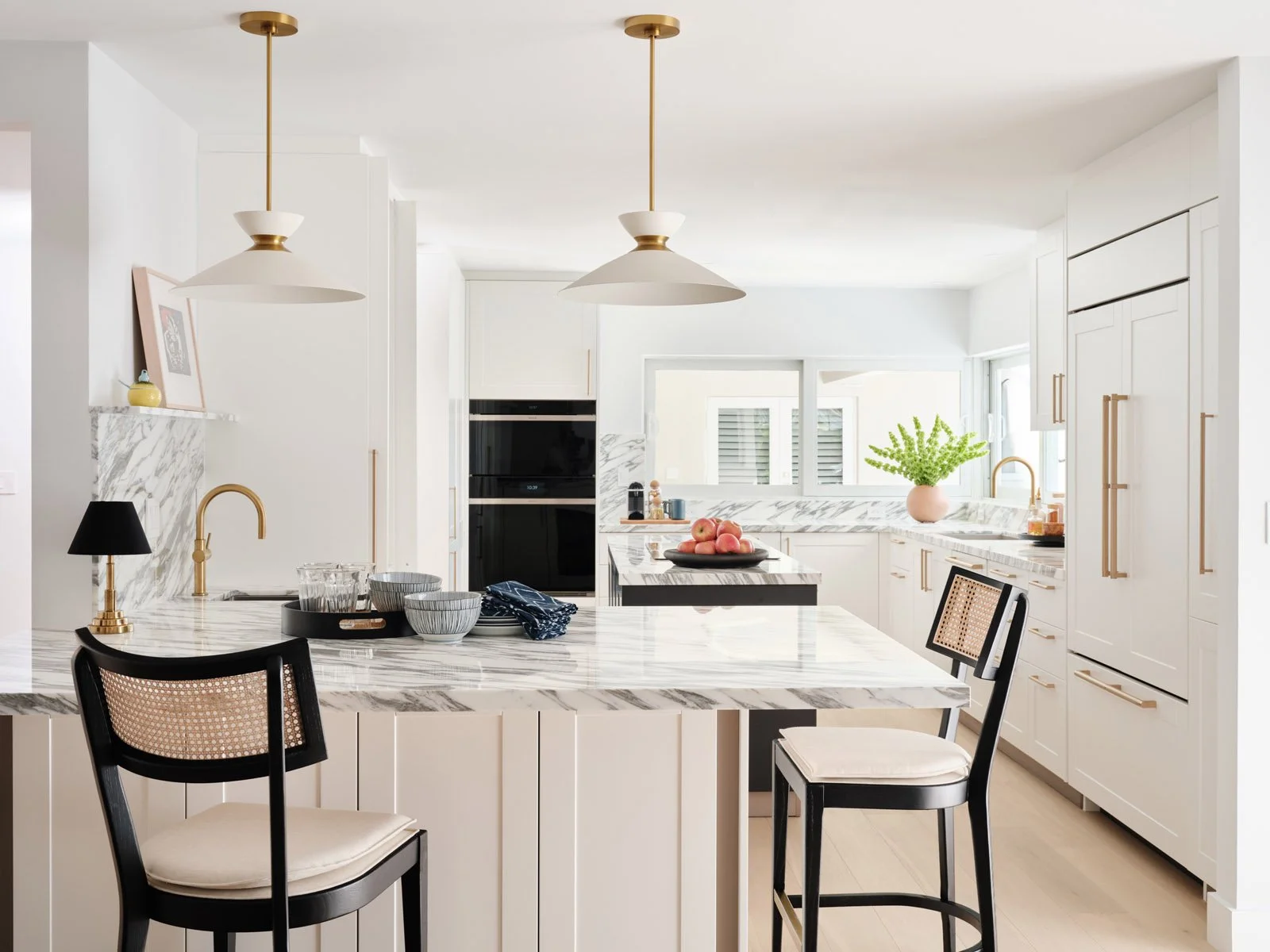
One of the biggest issues in contractor-led kitchen renovations is the lack of a comprehensive lighting and electrical plan. Most general contractors will not provide:
A detailed lighting plan
A switch location strategy
Layered lighting design (task, ambient, accent, low voltage)
Instead, electricians install what is standard or expected. In South Florida homes (especially open-concept layouts) this creates major functional issues:
Light switches placed in inconvenient or illogical locations
Poor lighting over prep areas and islands/peninsulas
No ambiance or layered lighting for evenings
Missed opportunities for under-cabinet or architectural lighting
An interior designer approaches this differently, asking:
How do you move through your kitchen daily?
Where should lighting be controlled for ease and flow?
Does your electrical panel support additional loads?
Should switches be consolidated or relocated?
These are decisions that need to be made before construction begins and definetly before walls are closed, not after.
The Subcontractor Domino Effect
In many Miami kitchen renovations, the general contractor delegates heavily to subcontractors which means:
The electrician decides outlet placement, the cabinet installer adjusts spacing and the tile installer determines layout details.
Each decision may be “standard”, but not necessarily aligned with your vision. This is how homeowners end up with:
Misaligned outlets and switches
Awkward cabinet proportions
Fixtures installed based on convenience, not design
Layouts that feel off, even if technically functional
By the time these issues are visible, correcting them requires rework, which means added cost and delays.

Why Cabinet Showrooms Don’t Solve the Problem
Starting at a cabinet showroom creates a similar issue.
Showrooms are excellent at designing cabinetry within your existing space. But typically, they are not evaluating whether your layout should change, or how your kitchen connects to the rest of your home.
They optimize within the box, but they don’t question the box.
In a market like South Florida (where many homes are being opened up, reconfigured, or modernized) that distinction matters.
What an Interior Designer Actually Does
For kitchen renovations that involve layout changes, lifestyle upgrades, or long-term investment, a designer plays a critical role that no one else in the process fills.
A designer resolves the entire project before construction begins. This includes:
Space planning and layout optimization
Kitchen flow and functionality
Integration with adjacent living areas
Material and finish selection & coordination
Lighting and electrical planning
Appliance integration and clearances
Kitchen renovations involve hundreds of interdependent decisions. Appliances affect cabinetry, cabinetry affects layout, layout affects lighting, lighting affects electrical and electrical affects construction.
A designer manages that entire chain, so decisions are made intentionally, not reactively.

Questions to Ask Before Starting a Kitchen Renovation
Before calling anyone, take time to consider:
What is your kitchen not doing well? Is it storage, layout, lighting, or overall flow?
How do you actually use the space? Daily routines should drive design, not trends.
Does your kitchen connect well to the rest of your home? In open-plan South Florida homes, this is critical.
What is driving your renovation? Function, aesthetics, resale -or a combination?
The Right Order for a Kitchen Renovation
The sequence that consistently leads to better results:
Start with design. Develop a complete plan, layout, lighting, materials, and function.
Then get contractor bids. With a defined scope and design, pricing becomes accurate and predictable.
Then visit showrooms. Selections become focused and aligned with the overall design.
The most expensive decisions in any renovation are the ones made after construction begins.

Why Planning First Saves You Money
In South Florida’s construction market, labor and material costs are already high. Mistakes amplify that quickly.
A fully developed design reduces change orders, construction delays, material waste and rework.
Planning is not about overthinking, it’s about avoiding expensive corrections later.
Materials and Finishes Come Last
Most homeowners focus first on:
Cabinet colors
Countertops
Tile
Hardware
These are important, but they are not the starting point.
A successful kitchen is not a collection of individual selections. It is a cohesive environment that supports how you live and connects to the rest of your home.
Do not start with a contractor.
Start with a plan: floor plans, lighting and switch layouts, material selections and a clear vision for how the space functions.
Then bring in a contractor to execute it. Because contractors don’t create the vision, they build it.
Want a complete kitchen planning roadmap?
We put together a FREE Kitchen Renovation Checklist that walks through every major decision (in the right order) before construction begins.
Planning a kitchen renovation and want to work with an expert interior designer? We’d love to connect.